

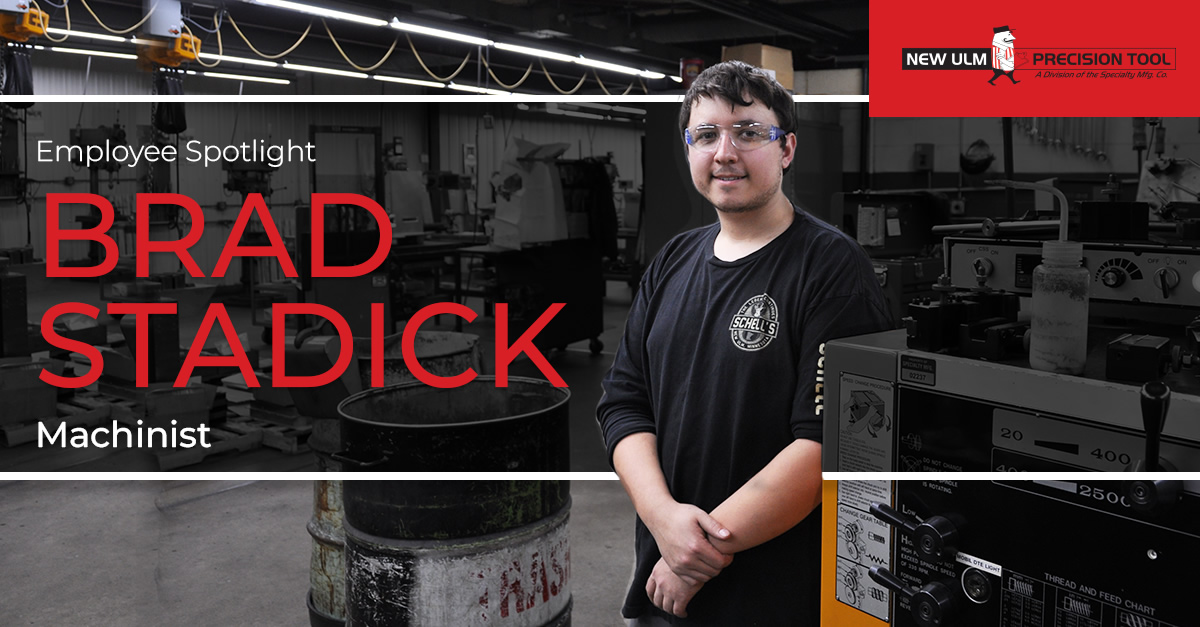
Employee Spotlight: Brad Stadick

The True Cost of Overseas Sourcing: Why Made in USA Saves Money

Purchasing agents evaluating manufacturers in the USA versus offshore suppliers often focus on unit price while overlooking the total cost of ownership. While the sticker price of an imported component may appear lower, the secondary expenses that come from extended lead times, quality inconsistencies and engineering delays can add hidden costs that quickly erode initial savings. For ball valve, check valve and quick disconnect manufacturers, as well as contract manufacturers and precision tooling shops in the USA, domestic production delivers measurable financial advantages through faster response times and vertical integration.

Understanding the true project costs helps engineers and procurement teams make informed sourcing decisions that balance budget constraints with operational reliability.

The True Cost of
Overseas Sourcing

The Strategic Advantage of
Domestic Vertical Integration

When Domestic Valve
Manufacturing Makes
Business Sense

The Specialty Mfg. Co.
Your Trusted Domestic
Manufacturer

Hidden Costs of Offshore Manufacturing

The total cost of ownership extends far beyond the initial purchase price. When sourcing industrial valves, custom quick disconnects and integrated components, a comprehensive cost analysis should account for:

  • Purchase price: Material, labor and supplier margin.
  • Freight and logistics: International shipping, duties, customs clearance and drayage.
  • Inventory carrying costs: Extended lead times require safety stock and warehouse space.
  • Quality management: Incoming inspection, rework and warranty claims.
  • Engineering time: Design iteration delays and specification communication challenges.
  • Opportunity costs: Revenue lost due to stockouts or delayed product launches.

Supply Chain Disruptions and Lead Time Variability

Lead time and supply chain challenges with offshore manufacturing can include the following:

  • Transit delays. Port congestion and customs clearance variability can add weeks to a delivery without warning.
  • Communication gaps. Time zone differences slow down technical questions, often delaying production by 24 hours for every query.

Domestic valve and quick disconnect manufacturers can eliminate ocean freight transit time, providing the predictable delivery required for modern lean manufacturing.

Quality Control, Compliance and Regulatory Risk

It’s often cost prohibitive to return batches with a high defect rate, and it’s essential in many industries that valves and quick disconnects operate properly from the start. Understanding regulatory requirements helps a provider to maintain proper quality system expectations. These include:

  • Build America, Buy American (BABA). Federal procurement preferences can mandate domestically-manufactured products.
  • Regulatory Compliance. Our teams work with an understanding of NSF Regulations and FDA 21 CFR requirements.
  • ITAR registered. Specialty Contract Mfg. is ITAR registered and is committed to strict security, strong documentation and aligning with rigorous standards for military and defense work.

All of our products are high quality and USA-made to meet both quality expectations and compliance requirements.

Supply Chain Disruptions and Lead Time Variability

Lead time and supply chain challenges with offshore manufacturing can include the following:

  • Transit delays. Port congestion and customs clearance variability can add weeks to a delivery without warning.
  • Communication gaps. Time zone differences slow down technical questions, often delaying production by 24 hours for every query.

Domestic valve and quick disconnect manufacturers can eliminate ocean freight transit time, providing the predictable delivery required for modern lean manufacturing.

  1. Name, title and how long you’ve been at Specialty Manufacturing Co.

Brad Stadick, and I have been a machinist with Specialty Manufacturing for one year.

  1. Describe what your department is responsible for. What tasks are done daily?

Our department is responsible for the final assembly of all fixtures, dies, and special machines. When problems arise with any of these assemblies, it is our job to figure out why the tool is not functioning correctly. Sometimes if could be as simple as drilling an oil line deeper so that the hydraulic clamping system has a complete circuit, or the problem could be a little more elusive. This department you could say is the last line of defense to prevent a faulty product from being shipped to the customer.

  1. What is a recent project that your department has been involve with? Describe what it was and why your team was successful.

One thing that makes our team successful is our ability to draw from each other’s different expertise to overcome the latest challenge. Teamwork is a vital part in any step-in manufacturing.

  1. What makes your team / department successful when tackling a new project?

One recent project that has been done in our department was putting on a replacement connector for an auger. We had to cut out the old connector because it was too worn, and weld in a new once. When the connector was put into final position there was a wide area that needed to be filled in with weld. Being that the part was round, it provided an excellent opportunity to “walk the cup”, which is essentially like walking a 55-gallon drum across the floor in a zig-zag motion, only with the gas cup of a tig torch. It makes for a quick buildup, and a nice-looking weld when done properly.

  1. What advice would you give to someone starting a career in manufacturing?

One piece of advice that I would give to anyone just starting in the trades in the trades is that “Quality is never an accident, it is always the direct result of high intentions, sincere effort, intelligent direction, and skillful execution. It represents the wise of many alternatives.” – Quote by Will foster. If an aspiring machinist or toolmaker understands this, there will be all kinds of opportunities for you to further yourself in this trade.

Interested in a career at The Specialty Manufacturing Co.? View our current openings.
Categories: Workplace

[wd_asp id=1]

New nylon suction strainers are available immediately. Suction strainers provide protection in liquid or air applications by trapping debris before it can enter and damage downstream system components. Many popular sizes can ship next day. Specialty Manufacturing Company suction strainers – also commonly referred to as sump strainers – feature type 304 stainless steel mesh sizes from 4 to 100 with a 1/8″ to 3″ Nylon NPT base. These strainers are rated for continuous use up to 200°F, and custom mesh sizes are available. CAD models and product drawings for the complete offering.