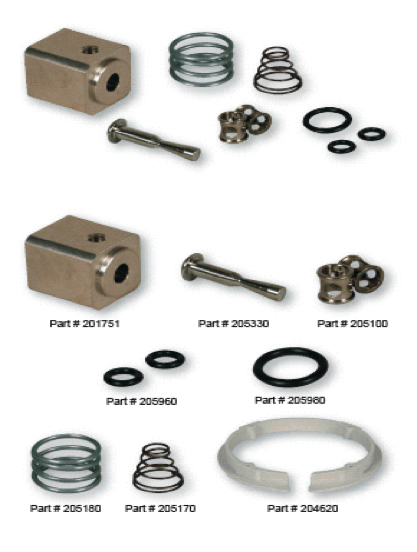
Workholding fixtures secure and position a workpiece with the appropriate amount of force during CNC machining processes, allowing the machine to operate without deforming the part. In addition to keeping parts in place, workholding fixtures ensure accuracy, efficiency and repeatability throughout every production cycle.
This guide explains how hydraulic and manual fixtures work and outlines which option may be best based on your specific operating requirements.
Hydraulic Workholding Fixtures
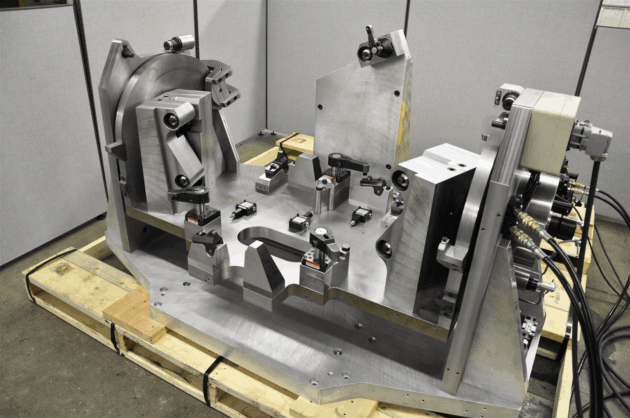
Hydraulic workholding fixtures use pressurized fluid to generate clamping force, securing parts consistently with minimal manual effort. Advantages of hydraulic fixtures include:
- High and Consistent Clamping Force
- Hydraulic systems apply the same pressure every time, reducing the risk of part movement or deformation during machining.
- Reduced Operator Fatigue
- The system performs the clamping, allowing operators to spend less time tightening bolts or adjusting clamps.
- Faster Cycle Times
- Quick actuation improves throughput, making hydraulic fixtures ideal for repetitive, high-volume production.
- Integration with Automation
- Hydraulic clamping can be electronically controlled, supporting lights-out manufacturing and robotic loading systems.
Hydraulic fixtures are well suited for large production runs, tight tolerances or automated environments where precision and repeatability are critical. These systems are often integrated into CNC machining centers or automated production lines. While initial setup costs may be higher, hydraulic fixtures offer long-term precision, reliability and the ability to automate clamping processes.
Manual Workholding Fixtures
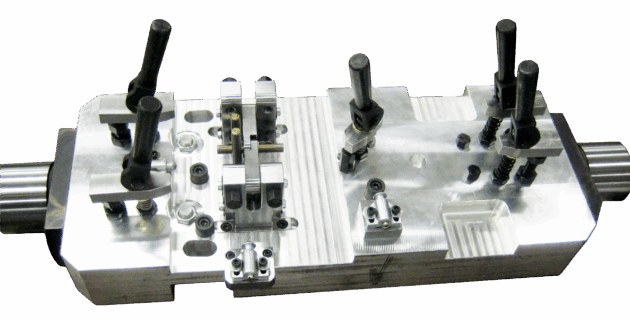
Manual workholding fixtures primarily rely on mechanical clamps, bolts or vises to secure parts. These fixtures are simple, dependable and highly adaptable, making them well suited for shops that handle a wide range of part types or smaller production batches. Advantages of manual fixtures include:
- Lower Initial Cost
- Manual systems require less equipment and feature simpler designs, making them a cost-effective option.
- Ease of Maintenance
- Fewer components result in fewer potential failure points and reduced maintenance requirements.
- Flexibility
- Manual fixtures are easier to modify for new parts or setups due to their modular design, which can help streamline processes for prototypes or short production runs.
- Operator Control
- Skilled machinists can make adjustments as needed without reprogramming or hydraulic tuning.
Manual tightening can introduce some variability in clamping force, and cycle times may be slower compared to hydraulic systems. Manual fixtures are often well suited for custom work, short runs and applications that prioritize versatility and low setup costs over automation. For optimal results, designs may incorporate features such as quick-change mechanisms to help reduce downtime.
Choosing the Right Fixture for Your Operation
The decision between hydraulic and manual workholding fixtures depends on your process requirements and overall operational goals. Consider how the following factors align with your design and production needs:
- Production Volume
- Hydraulic systems perform best in repetitive, high-output environments, while manual systems are often better suited for flexible, low-volume work
- Cost Requirements
- Manual fixtures typically offer a lower initial cost and simpler design, making them a more economical choice.
- Set Up Frequency
- Hydraulic automation allows fixtures to cycle consistently across multiple parts within a single setup, improving efficiency in high-volume operations.
In some cases, a hybrid approach may be the best solution. Hydraulic systems can be used for high-precision stages, while manual clamps support setup or secondary operations. The optimal configuration ultimately depends on workflow demands and the type of components being produced.
Workholding Expertise from New Ulm Precision Tool
At New Ulm Precision Tool, a division of The Specialty Mfg. Co., we specialize in custom workholding fixture designs that enhance performance across many industries. Our team brings a high level of craftsmanship and engineering rigor to every solution, combining decades of hands-on experience with advanced manufacturing technologies.
Contact The Specialty Mfg. Co. for Custom Fixture Solutions
By uniting engineering, machining and precision assembly under one roof, we deliver workholding systems designed to meet strict quality standards and perform reliably in demanding production environments. The result is an application-specific fixture that supports greater efficiency, higher throughput and long-term operational value.
Whether you need automated clamping or improved repeatability, our team can help design and build a fixture system tailored to your operation. Contact us to learn more.